
The 5 Largest Photovoltaic Plants in Spain 2025
Listen to this article
The year 2025 consolidates Spain as a European superpower in solar photovoltaic energy. Thanks to exceptional solar resources and strong investment drive, the country not only meets its National Integrated Energy and Climate Plan (PNIEC) objectives, but also sees solar become one of the main sources of electricity generation.
In this article, we explore the updated ranking of the five largest solar photovoltaic plants in Spain that are operational in 2025, true engineering giants leading the energy transition.
Ranking of the 5 Largest Solar Plants (2025)
| Rank | Solar Plant | Power (MWp) | Location (Province) |
|---|---|---|---|
| 1 | Francisco Pizarro | 590 MWp | Cáceres |
| 2 | Núñez de Balboa | 500 MWp | Badajoz |
| 3 | Mula | 494 MWp | Murcia |
| 4 | Don Rodrigo | ~450 MWp | Sevilla |
| 5 | Talayuela Solar | 300 MWp | Cáceres |
1. Francisco Pizarro Solar Plant - 590 MWp
The Francisco Pizarro Solar Plant remains the largest photovoltaic installation in Spain and a benchmark in Europe. Strategically located in the province of Cáceres, Extremadura, this mega-installation is a pillar of the country’s renewable generation.
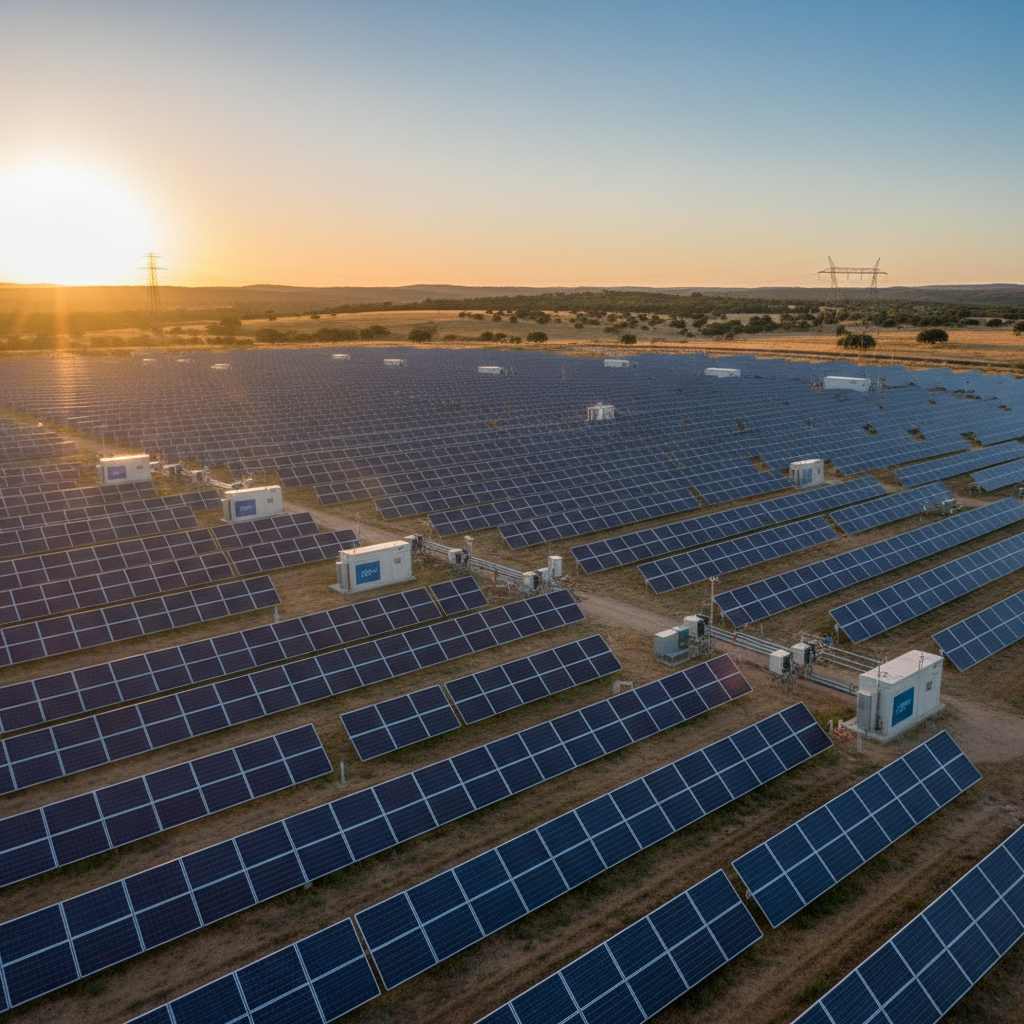
- Installed capacity: 590 MWp
- Owner: Want to know who owns this plant? Contact us for ownership data.
- Location: Torrecillas de la Tiesa (Cáceres), Extremadura
- Area: ~1,300 hectares
- Estimated Annual Production: Enough to supply more than 330,000 homes, avoiding the emission of 245,000 tons of CO2 per year.
- Technology: Features nearly 1.5 million bifacial photovoltaic modules mounted on single-axis trackers.
2. Núñez de Balboa Solar Plant - 500 MWp
Right behind, and also in Extremadura, the Núñez de Balboa Solar Plant was the installation that marked the beginning of the mega-project era in Spain, being at the time the largest on the continent.
- Installed capacity: 500 MWp
- Owner: Want to know who owns this plant? Contact us for ownership data.
- Location: Usagre (Badajoz), Extremadura
- Area: ~1,000 hectares
- Estimated Annual Production: 832 GWh, equivalent to the consumption of 250,000 homes.
- Solar Modules: 1,430,000 polycrystalline panels.
3. Mula Solar Plant - 494 MWp
Leaving Extremadura, we find the Mula Solar Plant in the Region of Murcia, another of the most powerful installations in the country, taking advantage of the exceptional solar resource of the southeast peninsula.
- Installed capacity: 494 MWp
- Owner: Want to know who owns this plant? Contact us for ownership data.
- Location: Mula (Murcia)
- Area: ~1,000 hectares
- Estimated Annual Production: More than 750 GWh, capable of supplying energy to around 200,000 homes.
4. Don Rodrigo Solar Complex - 450 MWp
The Don Rodrigo Solar Complex, located in Andalusia, is notable for being one of the first large projects developed without subsidies (at “market price”). It consists of several phases totaling considerable power.
- Total capacity: ~450 MWp (mainly Don Rodrigo 1 and Don Rodrigo 2)
- Owner: Want to know who owns this plant? Contact us for ownership data.
- Location: Alcalá de Guadaíra (Sevilla), Andalusia
- Area: More than 600 hectares in total.
- Estimated Annual Production: About 800 GWh in total, supplying about 220,000 homes.
5. Talayuela Solar Plant - 300 MWp
Closing our top 5 is the Talayuela Solar Plant, another powerful installation in Cáceres that surpasses other previous projects. This plant is an example of efficiency and sustainability in its design.
- Installed capacity: 300 MWp
- Owner: Want to know who owns this plant? Contact us for ownership data.
- Location: Talayuela (Cáceres), Extremadura
- Area: 820 hectares
- Estimated Annual Production: 500 GWh, enough energy for 148,000 homes.
- Technology: Uses single-axis trackers to optimize solar capture throughout the day.
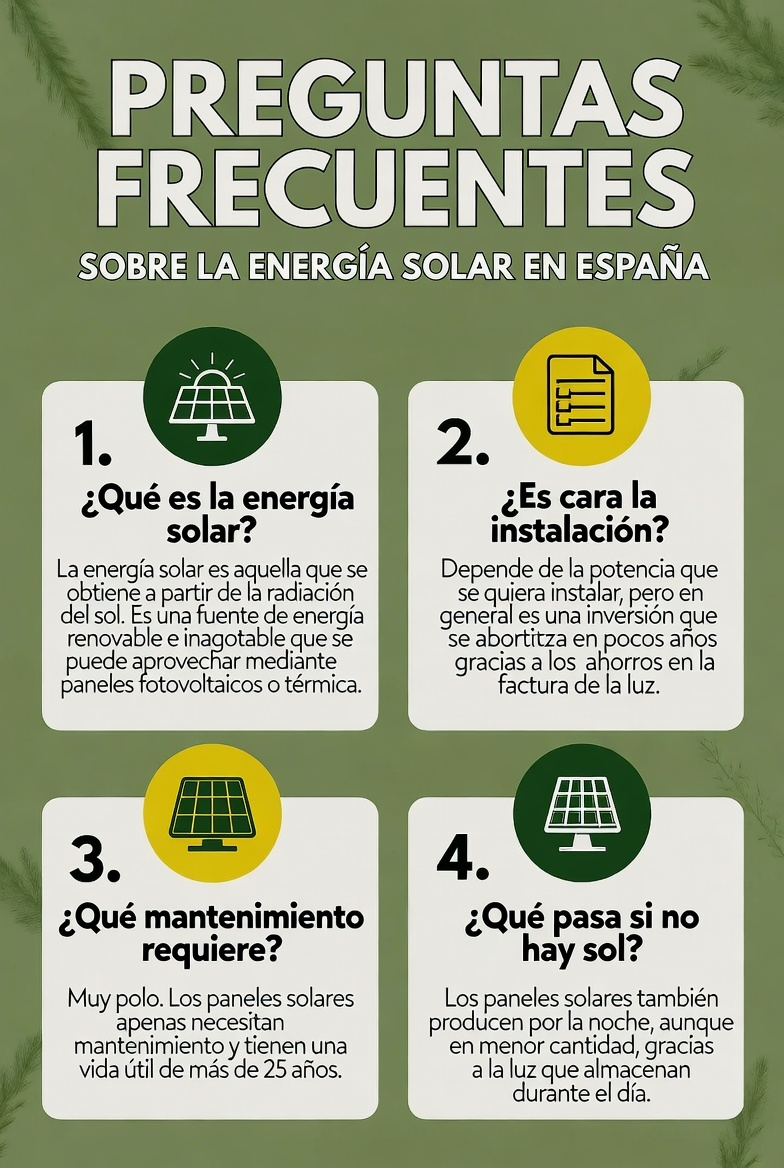
Frequently Asked Questions about Solar Energy in Spain
What is MWp (Megawatt-peak)?
The Megawatt-peak () is the standard unit for measuring the power of a photovoltaic plant. It indicates the maximum output power that the plant can generate under ideal laboratory conditions (solar radiation of 1,000 W/m² and cell temperature of 25°C). It is the key metric for comparing the size of installations.
Why are most large plants in Extremadura?
Extremadura (Cáceres and Badajoz) has become the solar “hub” of Europe for three main reasons:
- Solar Resource: It is one of the regions with the most hours of sunshine in Europe.
- Land Availability: It has large expanses of flat land, with low agricultural value, ideal for these installations.
- Infrastructure and Support: It has developed a robust grid infrastructure to evacuate energy and a favorable environment for project processing.
Is the largest solar plant in Spain also the largest in Europe?
Yes. As of 2025, the Francisco Pizarro Solar Plant (590 MWp) remains, in terms of installed power in a single phase, the largest operational photovoltaic plant in Europe.
Are there larger projects under construction?
Absolutely! The sector doesn’t rest. Although not operational in this ranking, there are already projects in advanced processing or construction phases that will exceed these figures. The most notable is the Erasmo Project in Saceruela (Ciudad Real), which plans to reach 1,000 MWp (1 GWp) and hybridize with batteries and green hydrogen, marking the next generation of solar mega-parks.
The Future: Beyond 2025
Spain is not only content with leading, but accelerates. The PNIEC aims for more than 45 GW of installed photovoltaic capacity by 2025, a goal that is being achieved thanks to these large projects and the rise of self-consumption.
The next step, which we are already seeing in 2025, is not just to generate, but to manage:
- Storage (BESS): Hybridization of solar plants with large Battery Energy Storage Systems (BESS) to store energy and feed it to the grid at night.
- Hybridization with Green Hydrogen: Projects like the aforementioned Erasmo that will use surplus solar energy to produce green hydrogen, decarbonizing other sectors such as heavy industry.

Conclusion
The five largest photovoltaic plants in Spain in 2025 are much more than numbers; they are tangible proof of the energy transition. Projects like Francisco Pizarro or Núñez de Balboa demonstrate the country’s technical and financial capacity to lead a more sustainable future less dependent on fossil fuels.
Want to know more details about these and hundreds of other plants? Visit our complete inventory of photovoltaic plants to explore detailed technical information, locations and real-time generation data.